
Occupational Therapy & Sensory Support · Programme
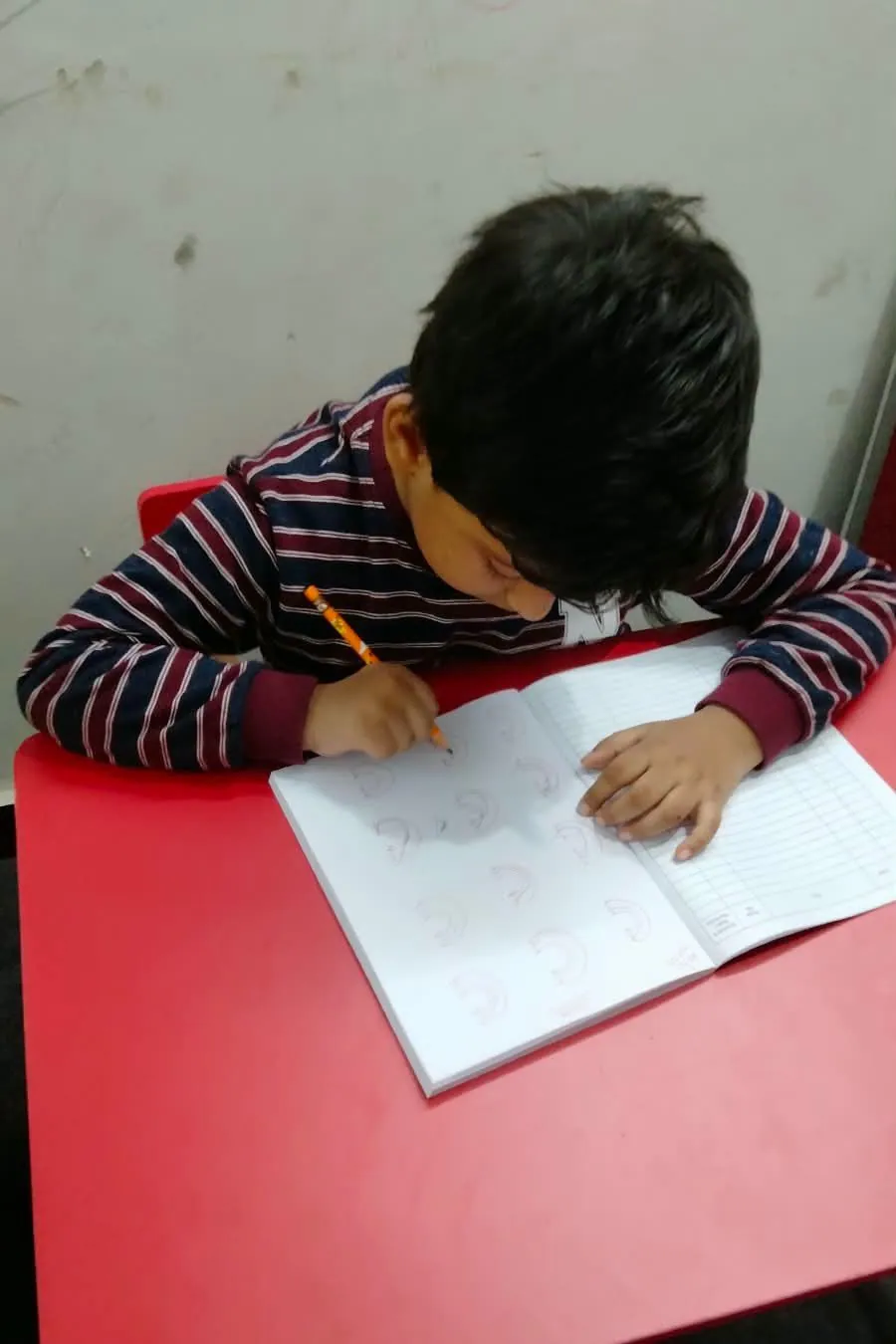
Good handwriting rests on posture, hand strength and coordination as much as on practising letters.
What is Handwriting?
Building the hands, eyes and habits behind writing.
Handwriting support looks at how a child sits, holds the pencil, forms letters and keeps pace in class. Often the cause of untidy or tiring writing is a mix of hand strength, coordination and attention.
Activities are playful and short, and move gradually from strengthening and pre-writing shapes to letters and sentences.
This page is general information, not a diagnosis. Which therapy suits your child is best decided after meeting the team.
In one picture
Helps a child practise
pencil grip, letter shapes and writing comfortably.
Drawn as you scroll. Illustration is abstract and does not show a method or an outcome.
Who this can help
Things parents often notice
- An awkward or tiring pencil grip
- Letters that are reversed, uneven or hard to read
- Slow writing that tires the hand
- Avoiding writing or colouring tasks
- Difficulty copying from the board
Skills we work on
What learning focuses on
- 01Pencil grip
- A comfortable, efficient hold on pencil or crayon.
- 02Letter formation
- Forming letters and numbers with the right starting points.
- 03Spacing and size
- Keeping letters even and words apart.
- 04Writing stamina
- Writing for longer without tiring.
Our approach
What sessions look like
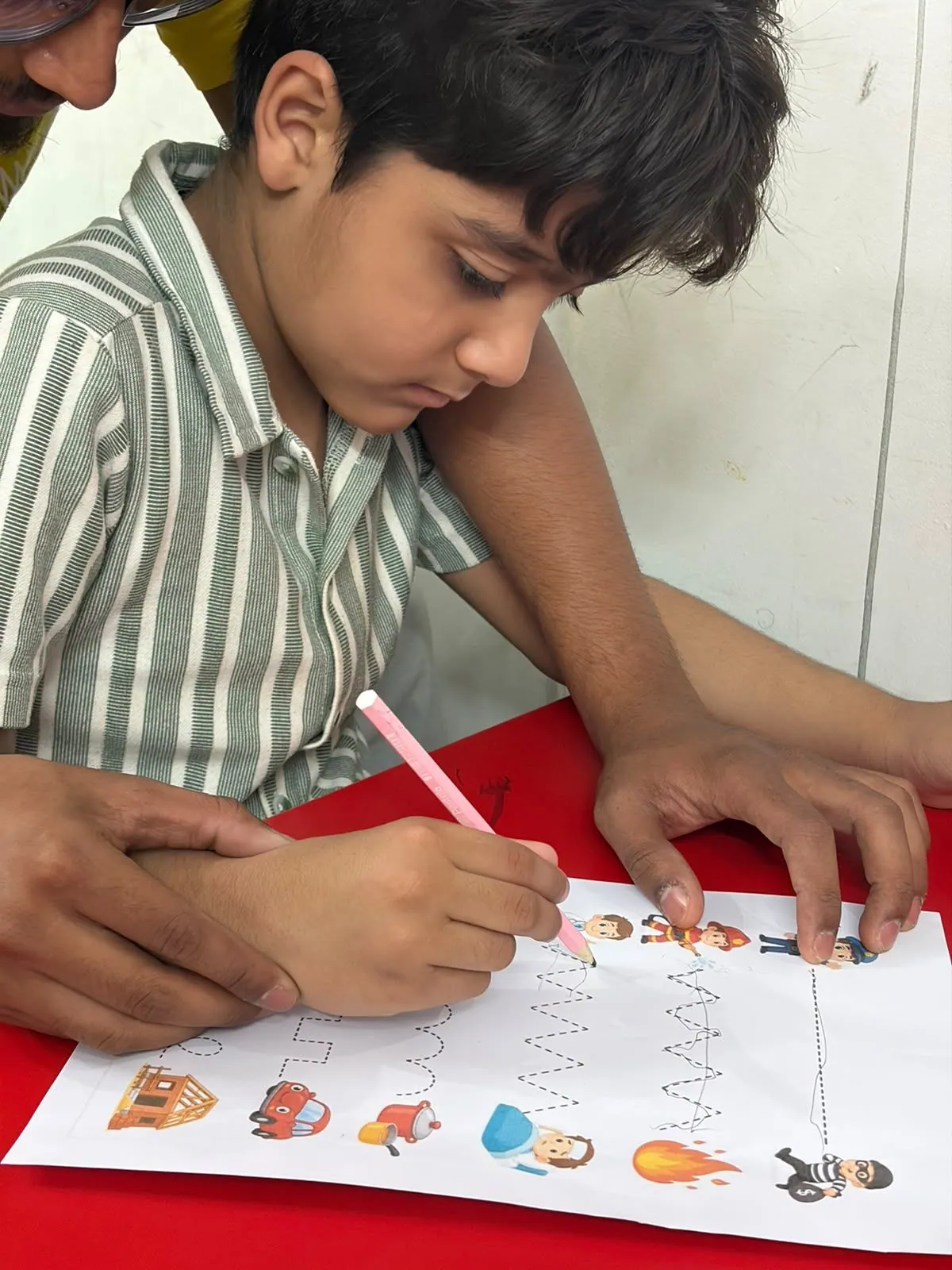
Sessions combine hand-strengthening play, pre-writing patterns and short writing tasks matched to the child’s class level, with home practice that stays brief and positive.
Every plan starts with a conversation with you, and the team reviews it as your child grows.
Our assessment process
Your first conversation
There is no pressure to arrive with answers. Here is how it usually begins.
Tell us what you have noticed
Call, message on WhatsApp or send the form. We help you choose a centre.
Meet the team
The team listens to your concerns and watches how your child plays and communicates.
Hear the recommendation
The team explains what they suggest and why, in plain language.
Start with a plan
Goals are agreed with you and reviewed together as your child grows.
Benefits and progress
What progress can look like
Progress looks different for every child. The team shares what they see, listens to what you notice at home, and sets new goals with you as your child grows. Nobody can promise a particular result or timeline, and the team will tell you honestly how things are going.
FAQ
Questions
What age is handwriting support for?
Children who are starting to write or finding school writing hard can both ask the team. Age is not a barrier to a conversation.
Talk to the team about your child
Call or message us and we will help you choose a centre and a first step.